By Aashu, owner of Stitch Partner, a store for tailoring tools and sewing machine spare parts in India.
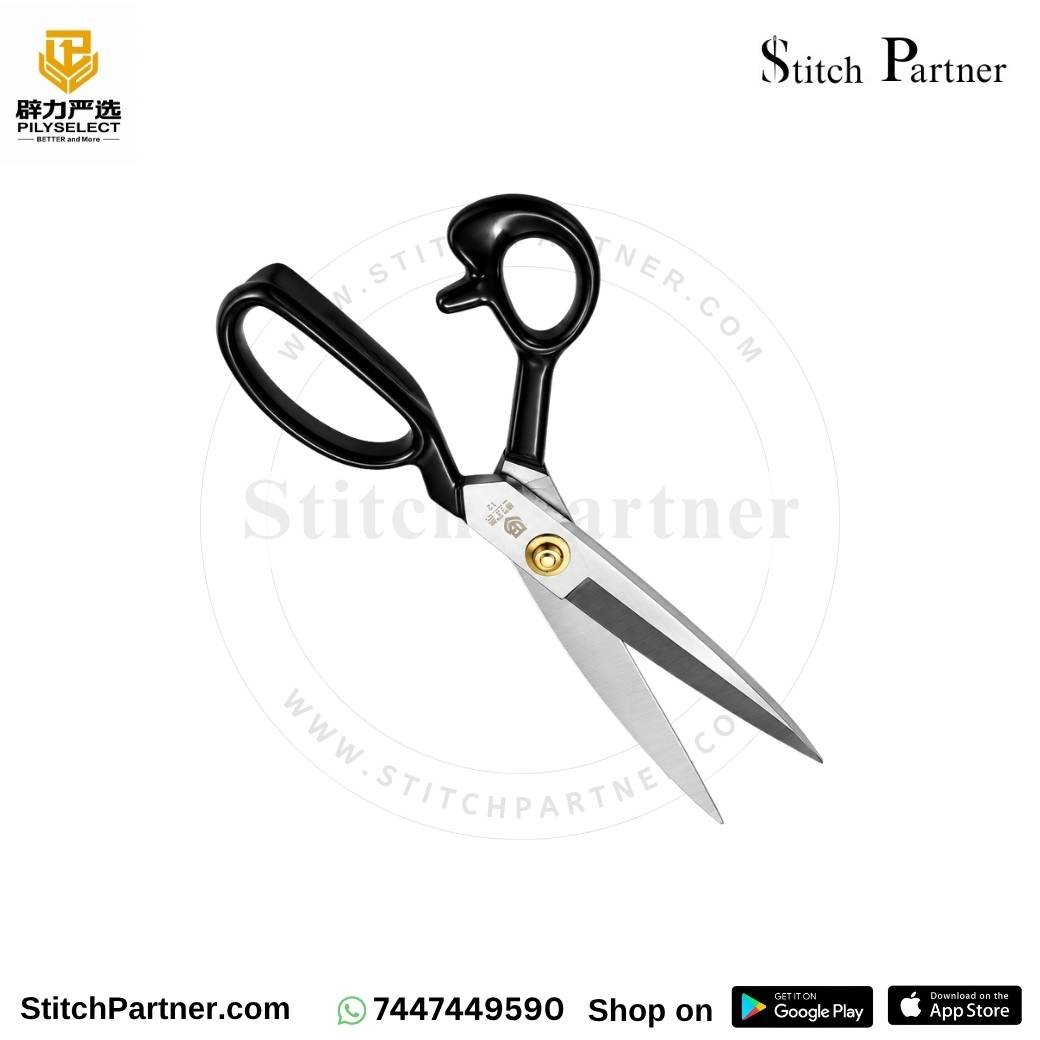
Long blades let you cut a long, smooth line in one stroke, which gives cleaner edges on large fabric spreads than short scissors that need many small snips.
See the full range of cloth cutting scissors. Delivery across India, with cash on delivery available.
Use fabric shears only on fabric, because paper dulls the edge quickly. Wipe the blades after use, put a drop of machine oil on the pivot now and then, and have a professional sharpen them when the cut starts to chew the fabric.
| Size | Best for |
|---|---|
| 8 inch | Small trimming, detail cutting, light fabric |
| 10 inch | General tailoring and alteration work |
| 12 inch | Long straight cuts, suit and uniform cloth, daily tailoring |
Longer blades make long cuts with fewer stops, which gives a cleaner edge. Shorter blades give more control on curves.
More: best cloth cutting scissors in India, PILY 12 inch cloth cutting scissors and PIN 7300 professional tailoring scissors.
Sharpen them when the cut quality drops: the blades start to chew, skip or leave a ragged edge. How often depends on how much and what kind of fabric you cut.
For long straight cuts, yes. For detailed or curved cutting, a shorter pair gives more control. Many tailors keep both sizes.
It is best not to. Paper wears the blade edge quickly and makes fabric cutting worse afterwards.
Electric scissors reduce hand strain on long cutting jobs, while manual shears give more control on curves and cost less to maintain. Choose by the work you do most.