By Aashu, owner of Stitch Partner, a store for sewing machine motors and spare parts in India.
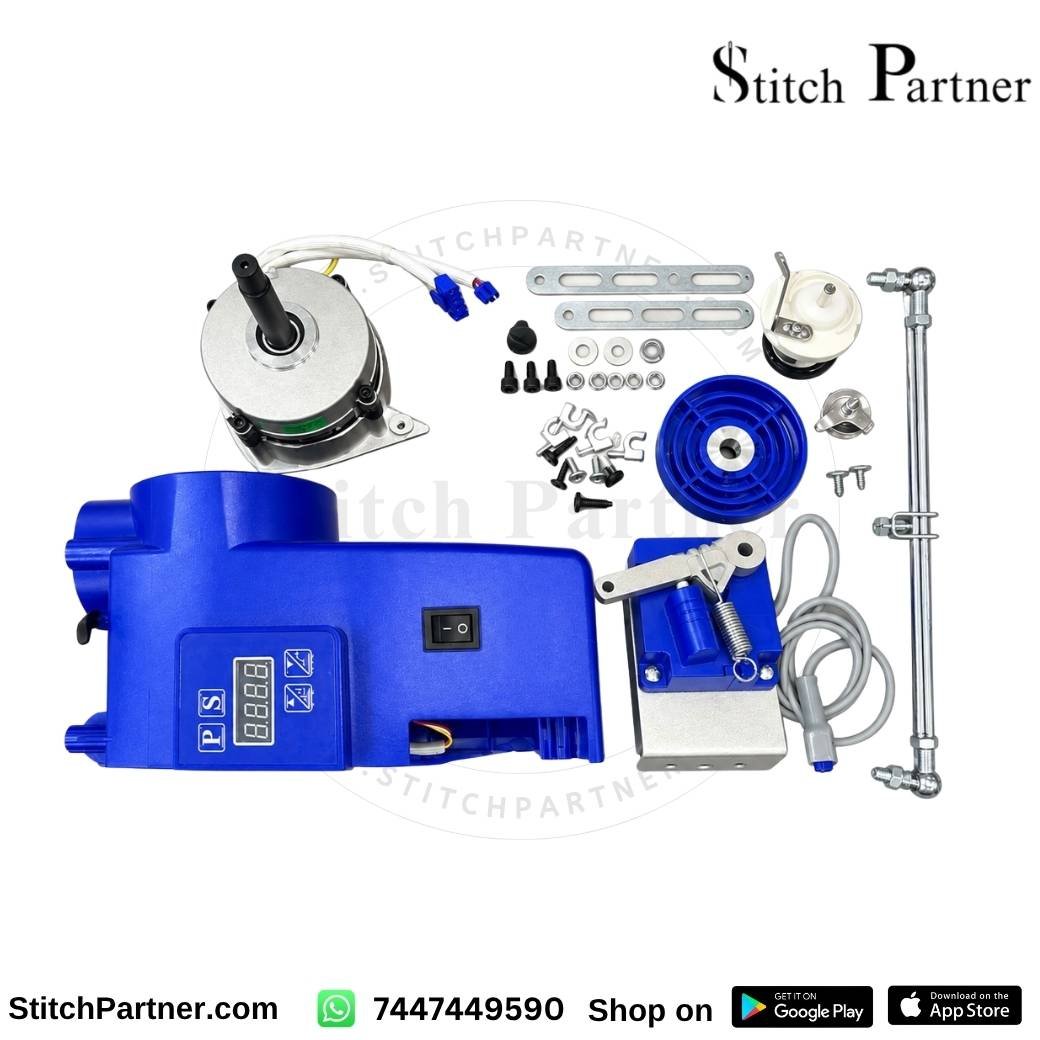
A clutch motor keeps spinning whenever the power is on, and the pedal engages the clutch to drive the machine. A servo motor only runs while you press the pedal, so it is usually quieter and draws less power.
| Clutch motor | Servo motor | |
|---|---|---|
| Running | Spins all the time while switched on | Runs only while you sew |
| Noise | Constant hum | Much quieter, silent at rest |
| Speed control | Depends on pedal and clutch feel | Adjustable, repeatable maximum speed |
| Electricity use | Draws power even when idle | Draws power mainly while sewing |
| Wear parts | Clutch, brake and belt wear | Fewer mechanical wear parts |
| Needle position stop | Not available | Available on many models |
See the best sewing machine motor guide and the universal direct-drive servo motor on Stitch Partner. If the new motor shows an error, use the servo motor troubleshooting guide.
For most workshops, yes: it is quieter, uses less electricity, gives finer speed control and has fewer mechanical wear parts. A clutch motor still works fine where machines are old and the operator is used to it, but spare clutch parts and maintenance add up.
On most industrial single-needle machines you can, but the mounting, pulley and belt must match. Check the mounting style and pulley size before ordering.
It usually does, because a clutch motor spins whenever switched on while a servo motor draws power mainly while sewing. The saving depends on how many machines you run and for how many hours.
Maximum speed is set on the control box. Start with a low setting and raise it, and check that the pulley size matches your machine speed requirement.
Confirm the voltage and power rating, the mounting style, and whether you need a belt drive or a direct drive unit. Compare the pulley size with your machine, and check that the pedal or controller matches the motor.
Delivery across India, with cash on delivery available.